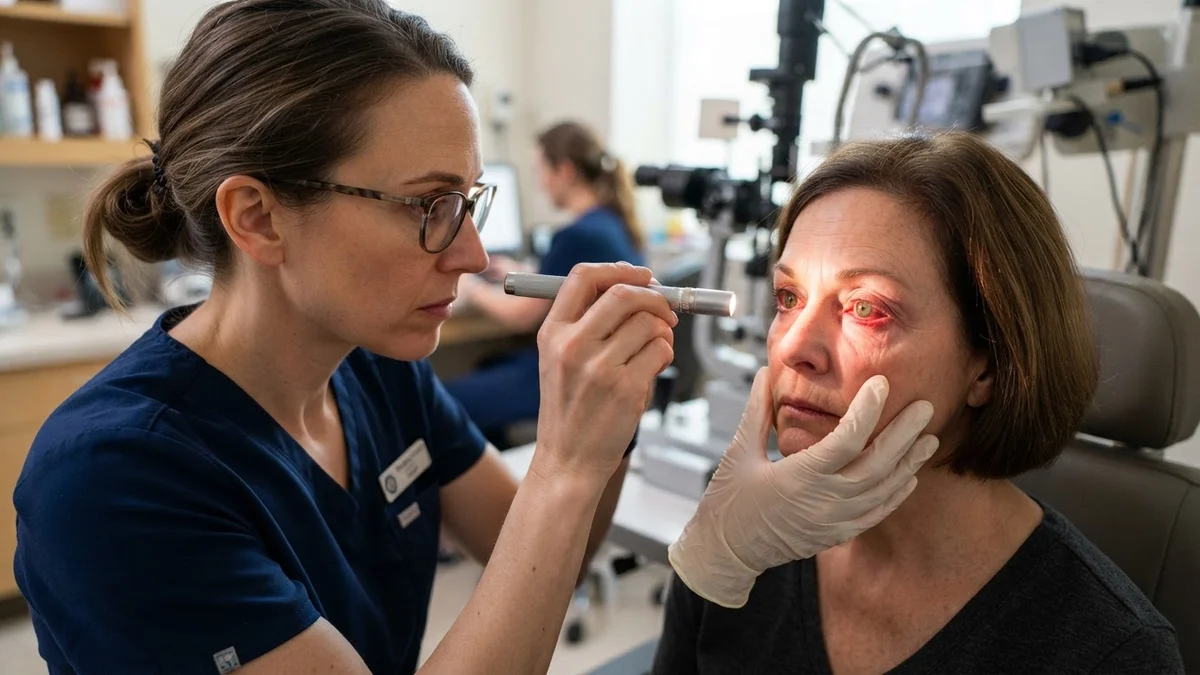
Conjunctivitis, commonly called pink eye, is inflammation of the conjunctiva, the thin clear layer that covers the white of the eye and the inside of the eyelids. It is one of the most common eye problems seen by doctors and usually gets better without lasting harm.
Main Types of Conjunctivitis
Viral Conjunctivitis
This is the most common type. It often comes with a cold, causes watery discharge and usually starts in one eye before spreading to the other. It is very contagious.
Bacterial Conjunctivitis
Bacterial infection causes a thicker yellow or green discharge, and the eyelids may stick together in the morning. It is also contagious.
Allergic Conjunctivitis
Triggered by pollen, dust, pet dander or other allergens, this type usually affects both eyes and causes intense itching and watering. It is not contagious.
Irritant Conjunctivitis
Smoke, chlorine, chemicals or a foreign body can irritate the eye and cause redness.
Common Symptoms
- Pink or red colour in the white of the eye
- Watery or sticky discharge
- Itching, burning or a gritty feeling
- Swollen eyelids
- Crusting of the lashes after sleep
How It Spreads
Infectious conjunctivitis spreads through direct contact with eye discharge, shared towels, pillowcases or make-up, and touching the eyes with unwashed hands.
Treatment
Viral conjunctivitis usually clears in one to two weeks. Cool compresses and lubricating eye drops can ease discomfort. Bacterial conjunctivitis often improves on its own, but a doctor may prescribe antibiotic drops or ointment to speed recovery. Allergic conjunctivitis responds well to antihistamine or mast-cell stabiliser eye drops and avoiding the trigger.
Prevention Tips
- Wash hands often and avoid rubbing your eyes
- Do not share towels, cosmetics or eye drops
- Stop wearing contact lenses until the eyes are clear
- Replace eye make-up used during an infection
Warning Signs: See a Doctor Urgently
Seek prompt medical care if you have eye pain, sensitivity to light, blurred vision that does not clear with blinking, intense redness, symptoms in a newborn, or if you wear contact lenses and develop a red, painful eye. These can signal more serious conditions such as keratitis or uveitis.
Disclaimer: This article is for general information only and is not a substitute for professional medical advice, diagnosis or treatment. Always consult a qualified healthcare provider about your own situation.